
LED streetlights will be changing how Los Angeles (L.A.) appears on camera, according to a Gizmodo article. As the city decides to replace warm colored high-pressure sodium streetlights with new blue-tinted LEDs, ‘Hollywood will never look the same,’ the article quoted No Film School article by Dave Kendricken. (Click here for photos that compare images before and after the LED installation.)
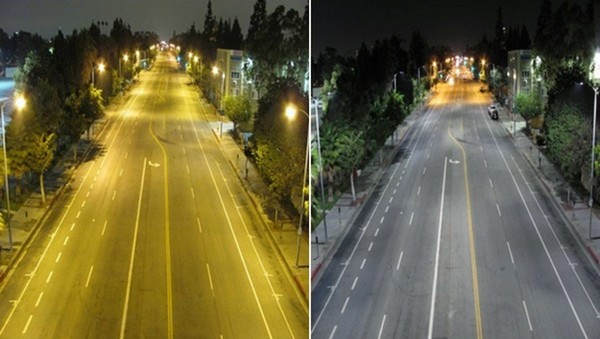 |
| Gizmodo compares L.A. streetlight effects before and after LED installation. (Photo Courtesy of Gizmodo) |
Michael Mann’s 2004 film Collateral is an example of a movie that heavily relied on the depiction of L.A. at night. Mann deliberately relocated the film setting from New York to L.A. partly because of the city’s nocturnal color tones and appearance on digital camera. The director’s well-known urban aesthetic
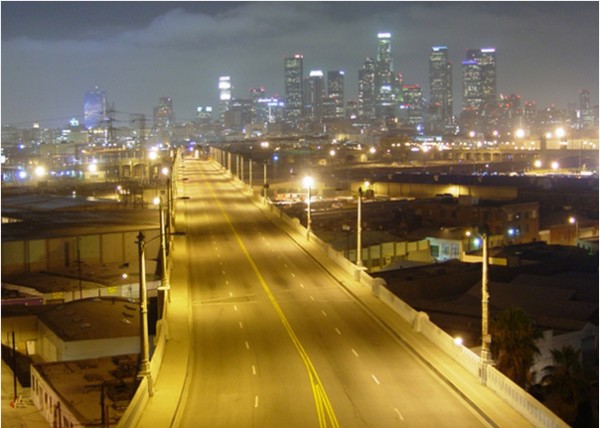
Due to LED streetlights discontinuous color spectrum, the lights that create a clinical lighting effect, are very difficult to mask in postproduction, wrote Kendricken. “The interesting thing about non-tungsten artificial light sources is that they often produce a non-continuous or incomplete spectral output. This can affect the appearance of certain colors under that output. More simply, you can’t really put colors back in that weren’t there to begin with, even by gelling such a light source or color correcting in post.”
 |
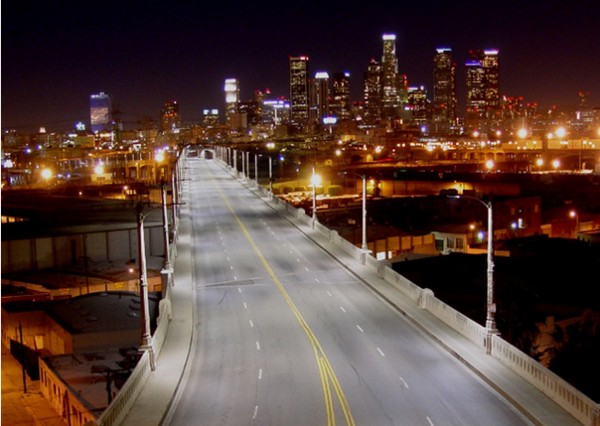 |
| Above:L.A. old halide streetlights night view. Below: New LED streetlight installations. (Photo Courtesy of Gizmodo) |
Kendricken even argues whether a city’s streetlights can be subject to historic preservation laws due to their unique color.
In the meanwhile, as other major cities including New York and London switch to energy efficient LED lighting, photographers and film makers will be facing new challenges as orange tinted nocturnal scenarios become history.