
According to market research firm iSuppli,due to their low power consumption, thin form factor, light weight and environmental friendliness, LEDs are set to take the notebook PC display backlighting market by storm during the next few years, with nine out of 10 large-sized mobile PC LCD panels expected to use the technology by 2012.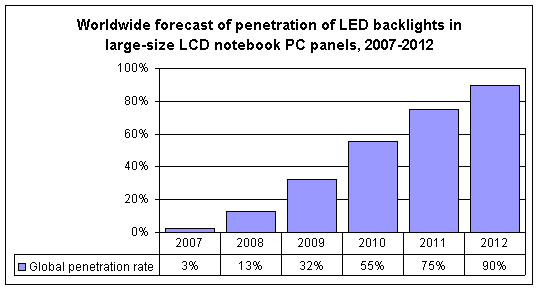
iSuppli estimates 90% of large-sized LCD notebook-PC panels shipped in 2012 will employ LEDs to backlight their displays, up from just 4.7% in the fourth quarter of 2007. By the end of 2008, LED-backlit large LCD notebook PC panel shipments will surge to 17.4 million units, up by more than a factor of six from 2.8 million units in 2007.
iSuppli defines large-sized LCD panels as those having a diagonal dimension of 10-inches and larger. "Despite the higher adoption rate for LED backlights in the notebook PC market, the downside impact on CCFL demand will be very limited. This is because notebooks constitute only a small percentage of total large-sized LCD CCFL demand while televisions and monitors have greater shares," said Sweta Dash, director of LCD and projection research at iSuppli.
Looking at the key area of power consumption, a 13.3-inch white LED-based notebook panel can use 20% less power and be 40% thinner and 20% lighter than a conventional CCFL-based product.
LEDs beat CCFLs in all these areas but fall short in one critical measure: price. RGB LED backlights are still much more expensive than CCFL-backlit notebook panels, with a US$50 to US$80 price premium, while white LEDs are slightly less than US$25 more costly than CCFLs. However, panel suppliers are starting to develop in-house LED backlighting capability to mitigate costs.
Yield improvement is another important factor for reducing costs. Yield rates for LED-equipped panels are still quite low, which sometimes contributes to higher costs. Panel makers are striving to improve these yields. The white-LED backlight notebook panel price gap compared to the CCFL backlight will narrow to within US$10 during the next few years.
Panel suppliers also are introducing new products that are thinner and brighter than the older models and have higher contrast ratios, which will help boost adoption rates. Moreover, new research is looking at how to increase the color gamut for white LED-based panels. Panel suppliers continue to introduce RGB LED-based notebook panels in 15.4-inch and 17-inch sizes, mostly for higher-end products.