
From April 22-23, TrendForce's LEDinside and TrendForce Display hosted the 2026 Next Generation Display Industry Seminar (DTS 2026) in Shenzhen, China.
During the afternoon of Day 2, a keynote session titled "AR/VR Near-Eye Displays" gathered TrendForce senior analysts and domain experts from across the near-eye display sector to deliver insightful presentations on Micro LED, Micro OLED, waveguides, glass materials, and smart glasses OEM fabrication. Together, they provided a holistic analysis of the future of AR/VR near-eye displays, enriching the audience with granular insights into the latest display technologies and industry trends. Key takeaways from these guest presentations are summarized below:
Glimmers of a Bright Future: LEDoS-Waveguide Integration and the Road Ahead

Eric Chiou, Senior Vice President at TrendForce
Amid the VR and Metaverse headwinds and the ongoing AI-centered tech race, AR glasses, in a symbiotic relationship with large language models, have become a strategic high ground for resource deployment among tech giants. As an emerging product category, AR glasses have leveraged a subtractive design approach over the past year to drive innovation. Centered on AI prompts as a core feature, these devices are advancing toward lighter builds, lower costs, and enhanced usability.
On the optical engine front, unlike the Meta-backed LCoS and video-centric OLEDoS alternatives, LEDoS technology has been increasingly viewed as the preferred display solution for products featuring AI teleprompter functionality. Specifically, there are three approaches to LEDoS full-color displays: X-cube, vertical stacking, and quantum dot color conversion. Offering distinct form factors and brightness levels, these approaches are mutually complementary in the market, further enabling the differentiation of end products.
In light of future demand for tens of millions of shipments, LEDoS bonding technology is undergoing rapid iteration. The C2W2W approach tackles three major challenges in parallel: wafer size mismatches, heterogeneous material integration, and pre-screening, driving higher manufacturing yield and efficiency compared with the conventional C2C solution.
On the optical waveguide front, diversification is also in full swing. In particular, SRG diffractive waveguides have become an investment hotspot thanks to their edge in lightweight designs. Together with Meta’s geometric waveguides and highly efficient PVG technology, these waveguide solutions are defining the industry's current strategies and future roadmaps. In terms of manufacturing processes, both nanoimprint and standard lithography offer unique trade-offs between pattern quality, FoV, and production costs, allowing for greater flexibility in future innovation.
TrendForce estimates that global AR glasses shipments will reach 32.1 million units by 2030 as leading manufacturers bring more powerful products to market. Driven by the supply chain’s collaborative efforts to overcome production challenges, LEDoS technology is poised to dominate the optical engine market with a 67% share and become the powerhouse for the booming AR industry.
Exploring Micro LED Full-Color Display Solution

Yi Liu, Vice President of Business Development at Hongshi Intelligent Technology
Full-color display has long been the ultimate goal for Micro LED microdisplay technology. Hongshi Intelligent Technology is one of the only two companies worldwide to achieve mass production and shipment of Micro LED microdisplay products. In 2026, the company officially launched its next-generation full-color Micro LED optical engine platform “Silk Light” to address the industry’s persistent challenge of balancing physical volume, brightness, and power consumption.
On the one hand, the Silk Light platform is built on the integration of two in-house innovations: HB2 (Hongshi Base × Hybrid Bonding technology) and HS Metasurface (Hongshi metasurface digital light field control technology) technologies. The HB2 technology leverages atomic-level Cu-Cu direct bonding to eliminate the need for traditional micro-contacts, thereby reducing overall volume. This approach also allows for ultra-high signal bandwidth while delivering very low resistance and excellent thermal dissipation.
The HS Metasurface technology, on the other hand, enables precise control over the phase, amplitude, and direction of optical waves. “Digitally programming” the optical path can achieve much higher external quantum efficiency (EQE) and light extraction efficiency, further shrinking the volume of optical engines to 0.16 cc, the smallest in the world.
The Silk Light platform combines these two innovative technologies with Hongshi’s own picture quality engine algorithms to deliver a pixel density of 10,583 PPI and 32 PPD (at 25° FOV), with a resolution of 640*480 and a weight of just 0.5g.
Looking ahead, Hongshi will advance Micro LED microdisplay technology while exploring new applications in optical communications. Micro LED technology features spatial reuse, parallel communication, and sub-millisecond (nanosecond) response times. Leveraging these characteristics, Hongshi is venturing into non-display applications, such as short-reach interconnects for AI data centers, in a sustained effort to deliver highly-efficient and low-latency solutions for integrated optical interconnect systems.
Emerging AI Glasses Trends and Luxshare Precision’s Solutions
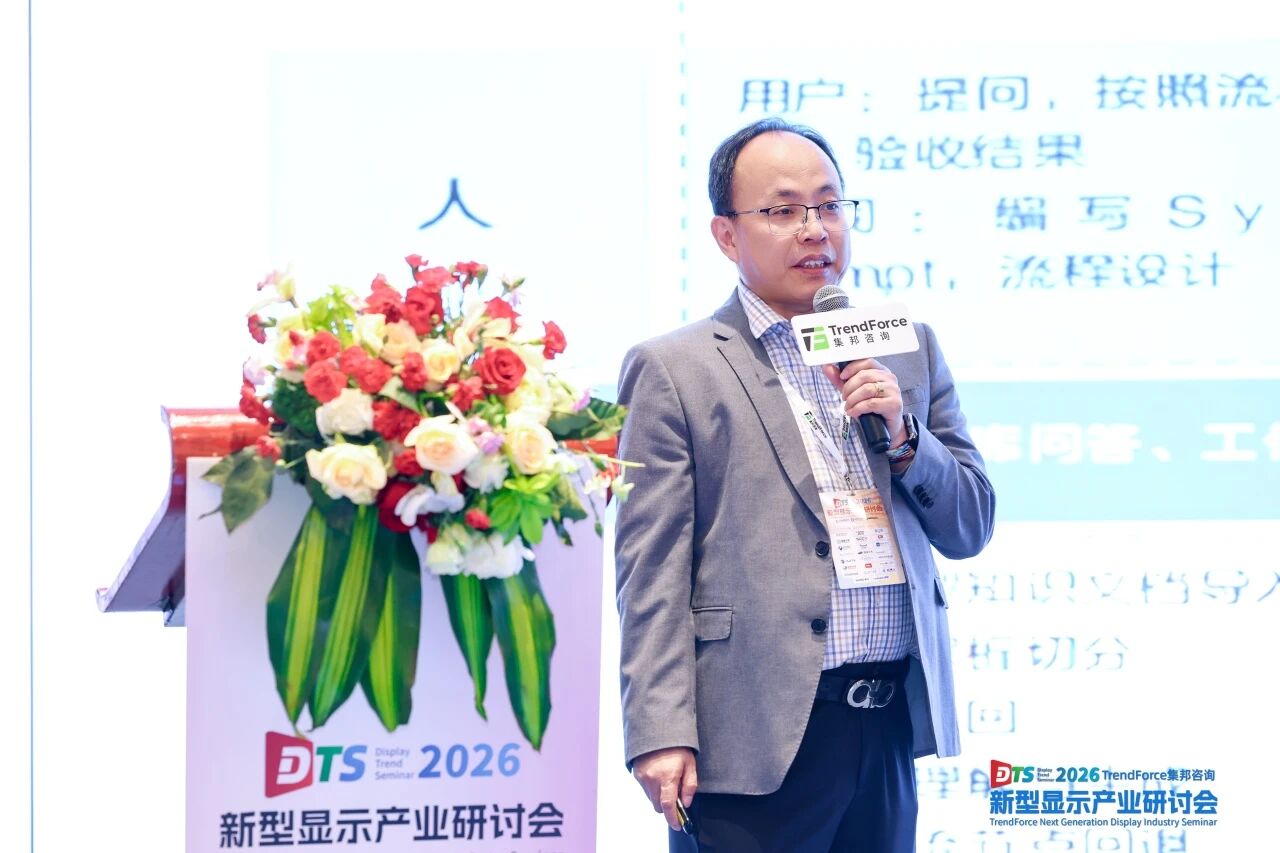
Guojun Xu, R&D Director of the ABG Product R&D Center at Luxshare Precision
Amid the rapid growth of large AI models, AR glasses have emerged as the ideal hardware for edge AI. Nonetheless, while going mainstream, AR glasses remain constrained by “the impossible triangle,” namely the fundamental trade-offs between lightweight design, long battery life, and high performance. Moreover, edge AI is still hovering between Level 2 and Level 3 autonomy, with breakthroughs in killer app experiences yet to be seen.
AR glasses also face several major challenges, including wearing comfort, display quality, thermal management, as well as privacy and security. At the early stage of development, products are expected to determine the best trade-off based on specific use cases. In the mid-term, co-optimizations of weight, performance, and lifespan are forecast to gradually dismantle the impossible triangle. Eventually, a long-term equilibrium will emerge to balance performance, cost, and user experience.
Under this dynamics, the future market is likely to be characterized by the co-existence of audio-only AI glasses, AI+Camera glasses, and AI+AR glasses, enabling the acceleration of AI glasses deployment.
In line with these market trends, Luxshare Precision has established a comprehensive portfolio encompassing audio-only AI glasses, AI+Camera glasses, monochrome green AR glasses, full-color AR glasses, and accessories, showcasing its expertise in end-to-end ODM and integrated R&D services.
As a pioneer in optoelectronics, Luxshare has concentrated its efforts on technology innovation and product development while amplifying its investment in R&D, thereby maintaining its leadership in the global tech race.
SEEFab Smart Production Line: Deployment and Evolution of Nanoprinted Waveguide Technology

Rui Shi, Co-founder and CTO of SEEV Optoelectronics Technology
With large AI models increasingly integrated into collaborative smart devices, AI glasses are projected to lead the edge AI hardware market in shipment volume. This positions high-quality, industrially scalable optical waveguides as a key enabler of their success.
SEEV Optoelectronics Technology is a Chinese manufacturer with deep expertise in optical waveguide technology. Leveraging an IDM (integrated device manufacturer) business model, the company has established a full-stack technology portfolio that spans optical design, module manufacturing, nanoprinting, BEOL packaging, and final assembly testing.
At SEEV, its core production line, SEEFab, has rapidly evolved over recent years, demonstrating immense production potential and outstanding product performance. Using the most advanced processes, SEEV’s optical waveguides deliver superior luminous efficacy, 99% transmittance, an enhanced contrast ratio of 60:1, and brightness uniformity of up to 45%.
The SEEFab line has evolved toward automation in several stages: It started as a manually-operated 4-inch pilot line before being upgraded to an 8-inch semi-automated line. Currently, this facility has transformed into an 8-inch fully-automated line, with plans in place to build new 12-inch fully-automated fabs.
SEEV has invested in infrastructure for full-auto coating and imprint processes, vacuum coating, and UV lithography, while simultaneously developing the SEEVerse design platform and its own smart manufacturing software systems. Through software and hardware co-optimizations, the company enables shorter time-to-market.
In short, SEEV has ramped up “lights-out factories” for full automation and an annual capacity of tens of millions of wafers. The company will continue to drive technological iterations to meet explosive demand for monochrome green and full-color waveguides, working alongside industry partners to open the vision gateway to the AI era.
An Optical Gateway to the AI Era: PVG Waveguide Scaling Challenges and Solutions

Bingchen Cao, COO of Goolton
With AI transitioning from the "computational world" to the "perceptual world," visual data is fast becoming the primary source of physical reality for machines to understand the world. Smart glasses are always-on, low-power, all-day wearable visual sensors, inherently positioned as the ideal on-device AI solution and the catalyst for a massive multi-trillion-dollar market.
However, the smart glasses industry continues to grapple with fundamental bottlenecks: insufficient display brightness, poor weight distribution, and inflated mass-production costs. To address these challenges, Goolton has identified an effective solution based on an advanced optical technology: Polarized volume grating (PVG) waveguides.
As a next-generation mainstream near-eye display solution, PVG technology demonstrates system-level advantages over other waveguide technologies. Compared with conventional surface relief grating (SRG) waveguides, PVG technology can deliver a wider color gamut and more uniform color consistency, while fundamentally eliminating the "rainbow effect" and achieving superior eye glow suppression. In terms of key performance metrics, PVG technology achieves an optical efficiency of up to 5,000 nits/lm, far surpassing comparable technologies, while registering an overall performance score of 92%.
Goolton has not only achieved algorithmic breakthroughs but also driven the PVG engineering development from a laboratory concept to mass production. In 2025, the company completed the world's first 12-inch automated production line for PVG holographic waveguides, reaching an annual capacity of 200,000 wafers. Furthermore, it has developed an innovative inkjet-printed local photo-alignment surface control process, becoming the industry’s first to achieve scalable manufacturing of single-layer, full-color PVG waveguides.
Looking ahead, Goolton aims to significantly widen the FoV of full-color waveguides from 25° to 50° by 2026–2028, while ramping annual capacity into the tens of millions. Backed by a vertically integrated, self-reliant R&D and manufacturing stack, Goolton is poised to set new benchmarks for optical display excellence.
High-Index Materials for AR Glasses: Latest Technology Trends and Advancements

Dengquan Han, AR Wafer Business Manager at SCHOTT
To achieve mass market adoption, consumer-grade AR glasses must find the perfect balance between multiple factors, with immersive experience, battery life, ergonomics, image quality, and durability all coming together seamlessly.
The groundwork for this achievement lies in the underlying wafer substrates. To this end, SCHOTT has established a full-stack operational framework encompassing raw material melting, precision processing, and optical coating.
Since 2015, SCHOTT has been committed to the development of high-index glass wafers, with its RealView lineup steadily pushing technical boundaries: starting at a refractive index of 1.8, scaling to mass-manufacturable 1.9 and 2.0 variants, and eventually achieving a breakthrough refractive index of up to 2.14 in 2024. This continued progression in material science paves the way for wider FoV designs in future AR displays.
Diving into the technical specifications, SCHOTT has demonstrated its cutting-edge processing capabilities and optical excellence. The RealView 1.9 Lightweight series reduces wafer thickness to just 250µm through material optimization. This enables a much lighter device, while preserving an ultra-high internal transmittance exceeding 99% (10mm@460nm).
Moreover, SCHOTT’s world-class ultra-flat wafer technology refines its total thickness variation (TTV) from 1µm to a mere 0.4µm, considerably lowering optical loss and aberrations within the waveguide. For etching solutions, SCHOTT offers high-precision TiO2 coating solutions that deliver a soaring reflective index of 2.3 to 2.5 and an incredibly low absorption rate of under 0.3%.
High-refractive-index glass has long been challenged by its inherent brittleness. To address this bottleneck, SCHOTT has developed a systematic approach to delivering mechanically-robust solutions. By optimizing material composition and chemical strengthening processes, the company has successfully increased wafer fracture strength by a factor of five.
Over the past five years, SCHOTT has channeled its efforts into technological development and manufacturing readiness through its global production and R&D footprint across Germany, Switzerland, China, and Malaysia. Leveraging these resources, the company supports customers with turnkey solutions, ranging from prototyping all the way to high-volume mass production.
Silicon-Based Microdisplay Development Brings XR Glasses Closer to Life

Yuan Yao, Executive Assistant to CEO at Nanjing Smartvision Electronics
To bring XR glasses into the daily lives of mainstream consumers, display component miniaturization and performance scaling remain among the most formidable technical barriers.
Silicon-based microdisplay chips are processed on a single-crystal silicon substrate and driven by a backplane using mature CMOS processes. These chips can achieve a pixel pitch of under 10μm and a pixel density exceeding 5,000 PPI. Furthermore, they offer significant advantages in microstructure scaling, control circuit design, and system integration. Silicon-based microdisplay technology not only enables compact display devices but also delivers high brightness, laying the groundwork for XR optical systems.
Nanjing Smartvision Electronics specializes in the R&D and manufacturing of silicon-based microdisplay chips, including LCoS microdisplay chips (ranging from 0.13-0.70 inches) and silicon-based Micro LED/Micro OLED microdisplay backplanes. In the LCoS microdisplay segment, the company has built its own back-end LCoS production line, ensuring end-to-end quality control from design through manufacturing. In the optical communications segment, its LCoS chip offerings have been successfully deployed in wavelength-selective switches, while providing strong support for China’s state-run infrastructure projects such as the “Eastern Data, Western Computing” data center initiative.
AI+AR Smart Glasses: from Niche to Mass Adoption and Beyond

Chuanxue Yin, Co-founder and SVP of Operations at INMO
Chuanxue Yin, Co-founder and SVP of Operations at INMO, suggested that integrating large AI models is crucial to accelerating AR glasses’ transition from a niche to a mass market. This AI integration not only breaks through the AR ecosystem’s application constraints but also enables lighter product designs.
However, AR glasses still face the challenge of balancing computing power, battery life, and weight, the so-called “impossible triangle.” Meanwhile, manufacturing costs remain staggeringly high, impeding broader market penetration.
To tackle these challenges, INMO has proposed an AI glasses development strategy that aims to deliver “lightweight” hardware and “heavyweight” AI computing. Through device-cloud collaboration, end devices can minimize the required computing power, bringing product weight below 50g and cutting costs by over 50% compared with traditional optical engines and waveguides. This approach aligns perfectly with mass-market demands for “affordability, comfort, and functionality.”
To address diverse consumer needs, INMO has developed a “3+X” smart glasses portfolio, where AI+AR technologies are driving progress toward next-gen smart mobile devices. For example, the INMO AIR series is designed as eyewear for smartphones and tablets, featuring array waveguides, 1080P resolution, and 99% compatibility with Android applications. Meanwhile, the INMO X series targets specialization in the sports and education segments.
The INMO GO series supports a matrix of practical applications for commercial and public sectors, while striving to set a new design benchmark for AI glasses. Featuring an ultra-light build and maximum cost-effectiveness, this series combines useful tools, including translation, teleprompting, AI notetaking, and AI facial recognition. The latest INMO GO3 model, in particular, boasts powerful live translation for 261 languages and AI voice generation, demonstrating its potential to lead the consumer market.
Looking ahead, Mr. Yin envisioned future breakthroughs in AI smart glasses: from non-display to full-color display configurations, from device-edge-cloud coordination to device-cloud synergy, and from single-purpose devices to a super-intelligent AI ecosystem. INMO will continue to deepen the integration of its AI-powered operating system and AI agents to reshape human-machine interactions, ushering in a new era of smart glasses alongside its partners.
Thanks to the unwavering support of our distinguished speakers, attendees, and partners: SCHOTT, Goolton, SEEV Optoelectronics Technology, Luxshare Precision, Nanjing Smartvision Electronics, INMO, and Hongshi Intelligent Technology, the “AR/VR Near-Eye Displays” keynote session at the 2026 TrendForce Next Generation Display Industry Seminar (DTS 2026) was a resounding success. Looking ahead, the near-eye display industry is set to sustain strong momentum, propelling smart glasses into a new phase of large-scale commercialization.
With the successful conclusion of TrendForce's 2026 DTS, the next-gen display industry stands ready to prosper, navigate the winds of change, and herald a new era of display technology.
TrendForce 2025 Near-Eye Display Market Trend and Technology Analysis
Publication Date : 29 August 2025
Language : Traditional Chinese / English
Format : PDF
Page Number: 168
|
If you would like to know more details , please contact:
|